Claiming The Digital Homestead
Building something yourself that the world insists you should buy as a subscription feels like a victory --it feels good.
Open any tech newsletter today, the narrative is entirely about corporate gatekeeping. You are told that to participate in the "AI revolution," you need to pony up twenty or thirty dollars a month per seat for a sterile, browser-based chatbot that lives on a corporate server farm, tracks your data, and updates its personality out from under you. If you decide to go the developer route and tinker with your own integrations, you are warned of the dreaded "sticker shock"—accidental loops that can run up a hundred-dollar-a-day bill before you’ve even finished your morning coffee.
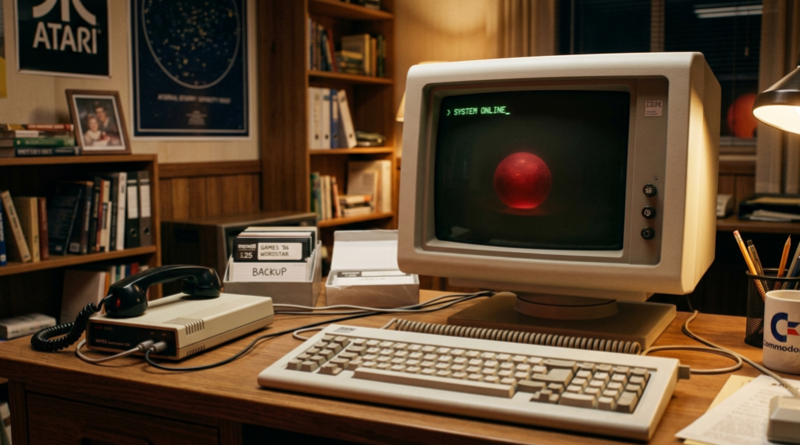
It all feels a bit like those early days of dial-up network computing.
Back then, if you wanted to access the wider digital world, you had to navigate a gauntlet of compounding costs. First, you’d pay connect-time charges to dial into a supporting public data carrier like Sprint (which operated the early Telenet network). Then, you might subscribe to an access utility just to route to non-local numbers without being billed by the minute by the phone company. And finally, once your modem successfully squealed its way through the pipe, you paid a premium, by-the-minute surcharge just to access the content and mainframe forums of CompuServe or The Source. If you lingered too long reading a thread, the meter was always running, and your monthly bill would arrive looking like a car payment. About the only survivor of that primordial era still ticking today is AOL. And, yes, AOL Desktop Gold is still available and runs under Windows right up through Windows 11.
Today’s AI ecosystem has resurrected that exact same billing anxiety. If you set up a custom AI integration, every single turn of the conversation is billed by the character. If you ask your system to monitor a database, check your server health, or help you debug a script, the "connect-time" starts ticking, and the API charges pile up rapidly.
But by setting up a virtual private flat-rate FreeBSD "pipe" for twenty dollars a month—the modern equivalent of finding a local, non-toll access number—and pairing it with an open-source gateway like OpenClaw, we’ve effectively bypassed those premium mainframe surcharges.
It is the modern equivalent of an offline reader for complex computing functions. Utilizing a technique called prompt caching—which essentially allows the AI to remember the context of our ongoing conversation for fractions of a penny rather than re-reading the whole book every time we speak— the billing meterhas been tamed and the data keeps flowing.
Instead of watching the meter spin up dollar signs all day, our actual daily API token costs have plummeted to mere pennies.
When you look at the actual ledger, the results are almost comical. For about one dollar a day—the combined cost of our flat-rate FreeBSD server hosting, our open-source gateway platform, and our optimized, highly active token access—we have a completely private, personal dedicated AI presence available all the time.
The geeky technical details of how the caching works and how the gateway maps those commands and what they all do, are subjects for a later post. For now, standing in my digital workshop, I’m just enjoying the view. It is proof that with a little consistency, a respect for pacing, and a refusal to run the race at a corporate sprint, you can still stake-out a remarkably advanced corner of the future on a lunch-money budget.