The social media platforms are finally turning off the opportunities for President Trump and many others to pump out misinformation and foment violence. Twitter and Facebook get the most attention because of their audience sizes, but there are lots of other places less obvious for those conversations and misinformation disguised as truthful information.
The right-wing app Parler has been booted off the Internet over ties to the siege on the U.S. Capitol. As the AP reported, "...but not before digital activists made off with an archive of its posts, including any that might have helped organize or document the riot. Amazon kicked Parler off its web-hosting service, and the social media app promptly sued to get back online, telling a federal judge that the tech giant had breached its contract and abused its market power. It was a roller coaster of activity for Parler, a 2-year-old magnet for the far right that welcomed a surge of new users. It became the No. 1 free app on iPhones late last week after Facebook, Twitter and other mainstream social media platforms silenced President Donald Trump’s accounts over comments that seemed to incite Wednesday’s violent insurrection."
Is that an attack on freedom of speech?
As Amber MacArthur wrote recently in her newsletter, "It's easy to say that moderating content is an attack on freedom of speech, but many fail to realize that freedom of speech does not mean freedom from consequences. Moreover, private businesses do have the right to set their own rules of engagement, which in the case of social media platforms is often outlined in their Terms of Service."
Germany - which has tighter controls on hate speech than the U.S. - nevertheless had Chancellor Angela Merkel saying that Trump’s eviction from Twitter by the company is “problematic.” Merkel’s spokesman, Steffen Seibert, sent a kind of mixed message saying that operators of social media platforms “bear great responsibility for political communication not being poisoned by hatred, by lies and by incitement to violence” but also that the freedom of opinion is a fundamental right of “elementary significance” and that “This fundamental right can be intervened in, but according to the law and within the framework defined by legislators — not according to a decision by the management of social media platforms. Seen from this angle, the chancellor considers it problematic that the accounts of the U.S. president have now been permanently blocked.”
Opinions in America are probably also pro and con with people on either side and some who are partially on both sides, like Merkel's opinion.
Jillian C. York says "Users, not tech executives, should decide what constitutes free speech online. Social media companies aren’t very good at moderating speech. So why do we ask them to?" She continues: "...While some pundits have called the decision unprecedented—or “a turning point for the battle for control over digital speech,” as Edward Snowden tweeted —it’s not: not at all. Not only do Twitter and Facebook regularly remove all types of protected expression, but Trump’s case isn’t even the first time the platforms have removed a major political figure. Following reports of genocide in Myanmar, Facebook banned the country’s top general and other military leaders who were using the platform to foment hate. The company also bans Hezbollah from its platform because of its status as a US-designated foreign terror organization, despite the fact that the party holds seats in Lebanon’s parliament. And it bans leaders in countries under US sanctions."
I think Snowden's sense of a turning point is correct, but it's not clear into which direction we will be turning.
It is easy to be seduced by statistics. I know several friends who have websites and blogs and are rather obsessed with their web statistics. They are always checking to see how many hits the site gets or what pages or posts are most popular or what search terms are being used to find them.
Social media has encouraged this with Likes and Retweets and Reposts. Our smartphones love to send us notifications that someone has engaged with some piece of our content.
I got this alert last month about another blog of mine:
Your page is trending up
Your page clicks increased by more than 1,000% over the usual daily average of less than 1 click.
Increased interest in a trending topic covered by the page.
Yes, their "possible explanations for this trend" are correct. It is a post about the winter solstice, so you might expect that interest would increase around mid-December. When a topic, such as "winter solstice," is trending generally, you will get more attention to your page. I also made some updates to the post and Google and other spiders scurrying around the web notice that.
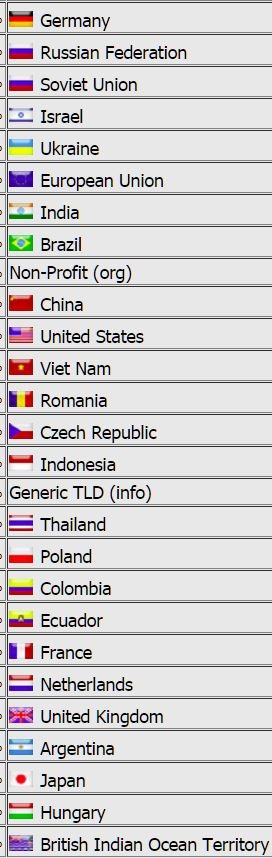
Top 30 of 130 countries that visited the site in the past year.
I have become less interested in the stats as the years have passed. In the early days of my blogging, I was much more interested in those hits, impressions, and visitors. Nowadays, I only check at year's end.
At the end of 2019, Serendipity35 added 3,595,439 hits to bring its total over the years to a rather daunting 104,596,905. In December 2019, we averaged 11,478 hits daily. It's more sobering to note that the average number of daily visits was 2722.
What I find more interesting in the analytics are things like which countries are visiting the site (see image) and the terms people searched that led them to the blog.
Back in 2006, I was asked to do a session for a webinar series for Higher Ed Experts titled “Podcasting Made Easy.” My session was titled “To be or not to be an iTunes U(niversity)?
At that time, I was working at NJIT and we had recently become one of the "sweet 16" universities that launched Apple's iTunes U. In the bio I used then I was the Manager of Instructional Technology at NJIT. For the previous two years, I had led the podcasting efforts at NJIT including the school’s launch that summer of our public and private use of Apple’s iTunes U.
Looking back at that webinar, I found in my files that Higher Ed Experts owner, Karine Joly, has included me in her blog series "3 Questions to a Higher Ed Blogger" where I talked about this Serendipity35 blog. Here are those 3 Q&A's. How do they hold up more than 13 years later?
1) You’ve been blogging at Serendipity 35 since last February [2005]. Why did you decide to blog at that time? Can you tell us a bit more about your experience with blogging?
Ken Ronkowitz, 2006
The Serendipity35 site originally was created as a way for Tim Kellers and me to try out open-source blogging software for our division at NJIT. This particular blog uses Serendipity software and our division at the university is #35, hence the title.
The first few entries were really just tests and I never intended to keep it going except as a demo site. I have a poetry site called Poets Online and I was already blogging for that using Blogger. I had also started a site within our department website at NJIT on Emerging Instructional Technology [EIT] where I intended to keep information on products and services we were testing. Unfortunately, I was never able to keep up with that website on a regular basis. However, blogging is easier (and I find more enjoyable) so that Serendipity35 has replaced that website as my way of keeping the NJIT community aware of new products, services, trends and the pedagogy of using them.
In addition, it has taken on a life of its own and gets many more views than the EIT site ever did and from a much wider audience than just NJIT. Getting comments from readers is an important part of the blogging experience too.
2) You blog a lot about new media (blogs, social networking websites, podcasting, etc.). What impact do you think these new technologies are going to have on higher ed?
I’m glad you ask what impact they are “going to have” because, unfortunately, I don’t think they have enough of an impact right now.
I see more penetration of Web 2.0 applications in K-12 teaching than in higher ed. It may be easier to implement some of these things at that level because you have districts, schools, grade levels and departments that can require their use through mandated curriculums. That’s rare in universities. “Required” and “faculty” are not words that go together easily at colleges. You’ll hear the much used (and abused) phrase “intellectual freedom” in response to attempts to require faculty to do many things. I’m not talking about having every faculty member have a blog, but it’s tough to get every faculty member to post syllabi online for each of their courses.
I think that students may be the drivers for the use of these applications as they have been in their desires and expectations to see course materials online, podcasting, 24/7 access, wireless campuses, etc.
I can’t see many educators being opposed in theory to the read-write version of the Web that is being called Web 2.0 and wanting to have students remain merely consumers (readers) of the web. All the tools like MySpace, blogs, video sites and other things that I write about have wide acceptance with students at all grade levels already. They won’t abandon them when they enter college, and they’ll be surprised and disappointed if they are not being used in their college classrooms and used or at least understood by their teachers.
Many faculty members were opposed to using email ten years ago, but those few who still are have to be seen as dinosaurs, and if they look up, they will see that an asteroid is headed towards them.
3) How is your blogging received by your administration and the rest of your campus community?
My director, Bill Reynolds, is always very enthusiastic and supportive of the department jumping into new technologies. For example, I wanted to pursue podcasting with faculty last fall so we jumped in and created our own podcasting site for NJIT and produced “coursecasts” for the fall and spring semesters. When we realized it was going to take off and that we needed greater support and infrastructure and heard about Apple’s iTunes U, we applied. We have been accepted and are building our site to launch this summer.
Our division’s Associate Vice President, Gale Spak, was the person who originally asked Tim and me to put together a day-long seminar on podcasting, wikis and blogs because she thought it had great potential for our academic community and for corporate clients, like those in NJIT’s own Enterprise Development Center. We did offer that day of workshops this past spring, but Tim and I actually ended up presenting the section on wikis using our own open-source wiki project.
I’ve heard nothing but positive comments from those on campus who have looked at the blog, though I’ll be first to admit that a large portion of the NJIT community still doesn’t know it exists. A number of faculty members who read it have asked to have blogs for their courses. We’re also looking at open source course management systems like Moodle which is offering blogging tools within a course itself. We have a web redesign project for the university that started this summer and they are using a private blog to keep the many team members up to date on developments and to get feedback asynchronously.
I see our blog as narrowcasting rather than broadcasting. The audience for what we write about is not the general public and that’s fine with us. I can tell by the site metrics that we have far more readers than those who actually comment on the site. In fact, just to illustrate the newness of this with educators, I have to say that I have been really surprised at the number of them who have emailed me comments about a piece rather than posting them on the blog itself. It’s not a question of being anonymous (you can do that on the blog) but more that they don’t quite get what a blog is all about.
Though blogs have been around for years, in education I think we are at a tipping point this year and that we’ll see much wider acceptance and use in 2007 and beyond.
How do my answers hold up in 2020? Pretty well, in my humble opinion. I certainly feel the same way about where we were in 2006 and some of my concerns and predictions are still valid.
I came to reexamine this old interview because I was looking at the Higher Ed Experts site which has been offering webinars and content for all these years. Their Higher Ed Social Media Conference has become an annual online higher ed conference.
Karine is still doing her interviews with her expert speakers. One response that caught my attention was a question posed to Emily Phillips, Social Media Coordinator at the College of William and Mary.
Where do you think higher ed social media is heading in 2020?
Emily Phillips, 2019
Whenever I’m asked the “what’s next” question it inevitably conjures up in my mind the 1994 clip of Katie Couric & Bryant Gumbel trying to figure out the @ symbol and asking, “what is the internet, anyway?” At the risk of earning the amused derision of future readers, I’ll say that I see a lot of potential for “creator” spaces like YouTube, podcasts and even Twitch, which lend themselves well to Higher Education content. I’m also keeping an eye on VSCO and Tik Tok, which are obviously popular with a huge chunk of our audience, but I’m not yet sure enough that our current and future students are interested in seeing or engaging with our content in those spaces to warrant diverting our resources in either of those directions.
I remember using that Today Show clip (below) when I started at NJIT in 2000 as a way of showing how much had changed in just those 6 years since it was recorded. I agree with Emily's sense of risk in predicting the future of anything in technology and especially its use in higher education. One way to limit risk is to avoid talking about specific tools. Rereading my answers, that MySpace reference really dates the response. She may be safe mentioning YouTube, Tik Tok, and Twitch in 2020, but I suspect that if she looks back on her answers in 13 years she will chuckle at those references.
I have been getting more emails sent to my blogs (I have 9 including this one - which is just ridiculous) offering "help" and also posts I might want to use.
Here's a recent example:
My name is [deleted], I'm a writer and blogger at IvyPanda. Recently I've been working on an article about communication skills and I visited your website while researching. There's a great post named "PowerPointless" (https://www.serendipity35.net/index.php?/archives/210-PowerPointless.html) I enjoyed reading! Unfortunately, I noticed a broken link there. Here it is:
https://www.toastmasters.org/tips.asp Since my brand new article is out, I think you can use it for updating your page. It has 27 tips to overcome public speaking anxiety and a bonus list of great courses available online. It's going to be an excellent replacement! Here's the link: https://ivypanda.com/blog/public-speaking-anxiety-tips What do you think? Just trying to help Warm regards, ** writer & blogger
There is software that can scan sites for broken external links. So, these people find a broken link and use that as a way to email and help you fix your site - which is useful - and then the email will always suggest a related link that I might use which comes from their site.
The first time I received one of these emails, I made the change and used their link and replied with a thank-you. But after receiving a dozen or so similar ones I had decided that this was just a way to place links on other websites.
This particular email I shared also offered links to her Facebook page. Yes, it was a woman, and on all the ones I have received, it was a woman - and an attractive woman at that. (Not the woman shown above.) I wonder if female bloggers get emails from male helpers? is she a real person? Is this a scam, and if so is it harmful?
This has a name. It is called "broken link building." This is a link building tactic. You find a broken link, recreate the dead content, then tell anyone linking to the dead resource to instead link to your recreated content. When it works - and I'm sure it often does - it is because you don't want dead links on your website.
You can feel some pride if you get one of these emails because websites targeted have a good following. They target you because they are trying to raise their own search engine optimization which is at least partially based on the ranking of the sites that link to you.
Did I fix my "PowerPointless" post here on Serendipity35because of that email? Yes. I got rid of the broken link, added a new one (not the one that was provided) and fixed a broken image. So, thanks.