Unplugging From Online Addiction

online addictionThis week, you probably saw headlines like "Meta and YouTube designed addictive products that harmed young people," as a jury in Los Angeles awarded the plaintiff damages of $6 million, with Meta to pay 70% and YouTube the remainder

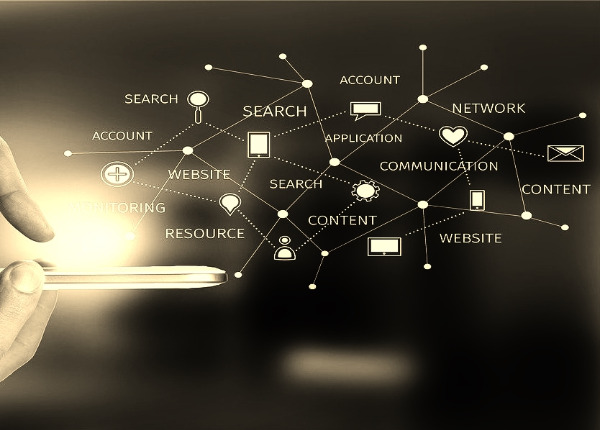
We are all plugged in to the electronic web around us that is far larger than the World Wide Web. That feeling of being unable to unplug is incredibly common and results from a powerful combination of psychological triggers, clever product design, and the essential role technology plays in modern life. "Addiction" is a strong word in this context, but it is the operative word in these kinds of cases.

Don't feel like you are "weak" or lack willpower if you find it difficult to disconnect. These systems are scientifically optimized to maximize your engagement. The core reason for compulsive checking is a chemical reaction in your brain centered on dopamine, the neurotransmitter associated with pleasure, motivation, and reward-seeking. 

Social media and even email platforms use the same psychological principle that makes slot machines and video games addictive. You don't know when the next "win" will appear. That could be a "like," a validating comment, an alert, or an email from someone "important." Are any of these really important? Maybe - and that possibility mixed in with that famous Fear of Missing Out (FOMO) is powerful. It compels you to keep checking. 

Designers know they need apps and websites to be addictive. I can list some of these techniques, and you can take them as things to be conscious of and avoid. You could also use it as a designer to create an addictive app or website. These things are intentionally engineered as features that make it easy to lose track of time and difficult to stop.

One of those techniques is using infinite scroll, which eliminates natural stopping cues (like the bottom of a page). The content just keeps loading, encouraging endless consumption. |

Push notifications hijack your attention and create a sense of immediate urgency or curiosity, pulling you back into the app regardless of what you were doing.

Autoplay on videos and content streams automatically transitions you to the next item, removing the moment you would have had to make a conscious choice to continue or stop.

As I said earlier, many techniques used in gaming are used in the gamification of other apps. You might not think of things like streaks, badges or LinkedIn profile completeness bars create a feeling of required daily attendance to avoid losing progress or status.

Most of these are psychological traps. FoMO and the social validation of likes and shares, and positive comments tap directly into our fundamental need for social acceptance and validation.

Do you ever find yourself waiting in line, standing on the train, or during a commercial break, checking your phone? That instant, low-effort stimulation. is a form of addiction. 

It's true that technology is no longer optional. We need it for much of our communication and work. We crave constant connectivity. Some jobs demand constant email and instant messaging availability. The lines between work and personal time have been blurring for at least two decades. We need directions (maps), banking, tickets, appointments, and emergency communications from our digital devices. That new reality seems to make a complete disconnect feel irresponsible, unsafe, and maybe impossible.  

But I don't think it is hopeless. The solution is not to throw away devices or turn off your cell service and WiFi or have more willpower. Advice from "experts" is to create friction between yourself and the addictive features. Only allow notifications for direct calls, texts, and genuinely critical applications. Designate specific times (like the first hour of the day, mealtimes, or the hour before bed) and locations (the bedroom, the dinner table) as completely device-free. Remove the most addictive social media apps from your phone, or move them off the home screen and turn off those badges and notification sounds that remind you that there are 3 new somethings on Instagram.

Why and When Did Social Media Go Wrong?

Following my last post about how social media is bad for your health - an idea that I think most people would agree with  - I also feel that social media has undeniably transformed communication and society in numerous ways. If you assume that is true, then you should ask why and when social media went wrong. This is a cross-post from my Weekends in Paradelle blog.

Despite lots of media attention about the negative effects of social media. it is still widely used. I started thinking about when social media became unhealthy. Any answer is subjective and complex and probably depends on individual factors such as personal experiences, societal norms, and technological advancements.While it offers many benefits, there have been turning points that have contributed to negative perceptions of social media.

Here’s my list of some turning points:

Privacy Concerns: As social media platforms evolved and became more integrated into people’s lives, concerns about privacy and data security emerged. High-profile incidents, such as the Cambridge Analytica scandal involving Facebook, raised awareness about the potential misuse of personal data collected by social media companies. This eroded trust among users and led to increased scrutiny of social media platforms’ privacy practices.

Spread of Misinformation and Fake News: Social media has facilitated the rapid spread of misinformation, rumors, and fake news. The ease of sharing content on platforms like Twitter, Facebook, and WhatsApp has made it challenging to verify the accuracy of information, leading to the proliferation of false narratives and conspiracy theories. This phenomenon has had serious consequences, including the exacerbation of social divisions, political polarization, and public health misinformation.

Cyberbullying and Online Harassment: Social media platforms have provided avenues for cyberbullying, harassment, and online abuse. The relative anonymity afforded by the internet, combined with the viral nature of social media, has enabled individuals to target others with hurtful or threatening behavior. This has had particularly harmful effects on young people, leading to mental health issues, social withdrawal, and even suicide in some cases.

Impact on Mental Health: Research has highlighted the negative effects of excessive social media use on mental health, including increased feelings of loneliness, depression, anxiety, and low self-esteem. Factors such as social comparison, cyberbullying, and the pressure to present a curated and idealized version of one’s life contribute to these negative outcomes. Additionally, the addictive nature of social media platforms, characterized by endless scrolling and notifications, can exacerbate feelings of stress and overwhelm.

Erosion of Civil Discourse: Social media was once seen as one way to “democratize” the web. But it has been criticized for contributing to the erosion of civil discourse and the rise of polarized and hostile online environments. Echo chambers and filter bubbles, where users are exposed primarily to viewpoints that align with their own, can reinforce existing biases and prevent constructive dialogue across ideological divides. This has implications for democracy, as it hampers informed decision-making and compromises the ability to find common ground on important societal issues.

So, when and why did social go wrong?

When I was teaching a graduate course in social media, we talked about its timeline history. That was 2016 and we were only talking about the negative effects as a fairly new point on that timeline. If I were teaching that today, I would need to add developments in the history of social media that mark shifts toward negative effects:

Here is a start on that list:
Proliferation of Platforms: Social media platforms began to gain popularity in the early 2000s with sites like MySpace and Friendster. As more platforms emerged and gained widespread adoption, the sheer volume of social interactions online increased dramatically.

Introduction of News Feeds: The introduction of news feeds, where users could see updates from friends and pages they followed in real-time, marked a significant shift in how people consumed content on social media. This change led to increased time spent on platforms and potentially unhealthy comparison behaviors.

Rise of Smartphones: The widespread adoption of smartphones made access to social media constant and ubiquitous. People could now engage with social media anytime, anywhere, blurring the boundaries between online and offline life.

Algorithmic Changes: Social media platforms began to implement algorithms to curate users’ feeds based on their interests and behaviors. While these algorithms aimed to increase engagement, they also contributed to echo chambers, filter bubbles, and the spread of misinformation.

Data Privacy Concerns: High-profile data breaches and scandals, such as the Cambridge Analytica scandal involving Facebook, highlighted how social media platforms could compromise users’ privacy and security. These revelations eroded trust in social media companies and raised concerns about the ethical implications of their practices.

Overall, while social media has brought about numerous positive advancements in communication and connectivity, its negative effects have become increasingly apparent over time. The exact point at which it became “unhealthy” is difficult to pinpoint, but these developments have collectively contributed to growing concerns about the impact of social media on individuals and society.
WFH - Work From Home

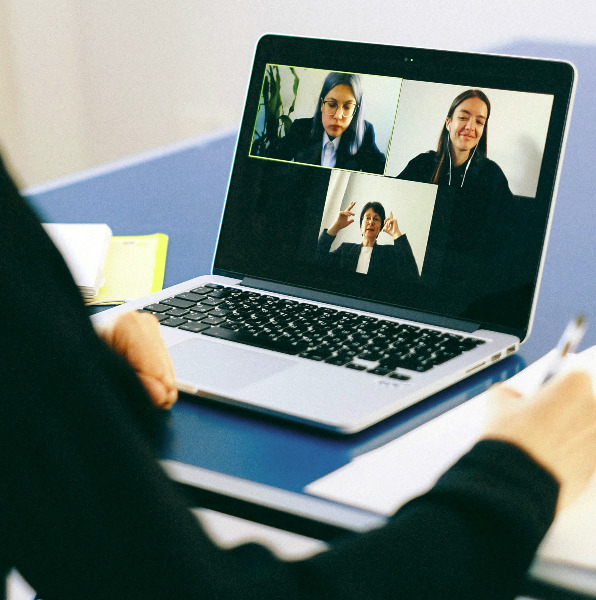
remote meeting

Photo by Anna Shvets

I have been seeing the abbreviation "WFH" used more lately. It stands for “work from home” which is work being done remotely, instead of at an office. Although many organizations transitioned their employees from the office to WFH during the Coronavirus pandemic, the WFH idea has not gone away. Both workers and employers saw advantages to remote work.

In my reading, I have come across studies that show productivity while working remotely from home is as good or better than working in an office setting. One article states that those who work from home spend 10 minutes less a day being unproductive, work one more day a week, and are 47% more productive.

Surveys of workers seem to indicate that from that point of view, the plusses to WFH include: 

  • the ability to flex work hours (but not decrease them in most cases)
  • gives a better work-life balance 
  • eliminates the cost and inconvenience of a commute 
  • no office politics 
  • less need for childcare (though not every parent can care for children and work)

In these same surveys, it seems that many of the minuses fall into two levels. Workers either feel something is missing entirely, partially or just not as effective as when they are in the office.

  • less or less effective or no collaboration
  • less or less effective or no mentoring
  • Let's face it, despite office politics, the office is also a part of many workers' social life. I met my wife at work and many of my friends too. Online TGIF happy hour just isn't the same.
  • It is harder to understand the "corporate culture" and feel like part of an organization when you are at a distance. Some people feel "disconnected" from their employer and fellow employees.

These are broad answers and every job has its own unique plusses and minuses. A salesperson who is used to making in-person contact with customers and potential customers might actually miss commuting to meet them and might find that sales are better in a face-to-face meeting. Not everyone has the equipment they need to do their work from home. The people we labeled as 'essential workers" during the pandemic's worst days probably have no option to work from home now.

According to the 2021 State of Remote Work Report from Owl Labs, 2021 was the year the world stayed remote, and 90% of the 2,050 full-time remote workers surveyed said they were as productive or more productive working remotely, compared to when they toiled in the office. A Forbes article is headlined "Remote Work Is Here To Stay And Will Increase Into 2023, Experts Say."  

In education, a NY Times article is similarly headlined "Online Schools Are Here to Stay, Even After the Pandemic," though the sub-heading is "Some families have come to prefer stand-alone virtual schools and districts are rushing to accommodate them — though questions about remote learning persist." I know colleges that are still offering more online sections than before the pandemic. Partially, it may be because the investment was made in the technology so "let's get some use out of it." Students - and more importantly, faculty - who had not worked online may have found it to be better than they expected with some of the same plusses are above.

The push for K-12 schools to go back to "normal" was much greater than the push for higher education. Though K-12 school districts also made the shift with technology, it might only be used now for special situations (weather-related closings, absent students, parent content, professional development etc.)

To make a K-20 generalization, there is greater hybridization of earning now than there was pre-pandemic. That may also be true in the workplace.

The Disconnected 2022 Edition

brain connectIt's 2022 and I am reading an article in The Chronicle by Beth McMurtrie about how the pandemic forced disconnections in early 2020. On the other hand, we also became more connected to friends, offices, campuses, and stores through technology and media.
The article took me back to a keynote presentation I did back in January 2016. I titled that talk "The Disconnected." The talk grew out of the many references I had been seeing to people who seemed disconnected from many aspects of society.

There was the observation that there was a re-emergence of people who wanted to learn on their own rather than in schools. These autodidacts were a new group of learners that I felt might be reshaping school, especially in higher education which is a choice rather than a requirement.

In 2015, the sharing economy, the maker movement, the DIY do-it-yourself movement, and open-source coding were all topics of interest.

These trends were not limited to young people or students. Many people were “cord cutting” from traditional media. But the trend was especially evident in young adults. Even broader was a “rent rather than buy” mindset that was affecting purchases of media (music, movies, books, magazines), cars (lease or use a car service rather than own a car), rent an apartment or home and avoid the self-maintenance, mortgage and taxes.

In 2015, the “disconnected” comprised about 25 percent of Americans, according to Forrester Research. They estimated that number would double by 2025. Has it?

That new article is about students who seem to have disconnected during the pandemic and are not reconnecting now. Maybe they will never reconnect. 

According to McMurtie's article, fewer students are going to classes. Her interviews with faculty show that those who do attend avoid speaking if possible. They are disconnected from the professor and their classmates. They don't do the assigned reading or homework and so they have trouble with tests. They are disconnected from the course content.

The Chronicle had more than 100 people tell them about their disconnected students. Some called them “exhausted,” “defeated,” or “overwhelmed.” This came from faculty at a range of institutions.

usb connect

Why are they disconnected?

Reasons given by professors include pandemic-related items. Many students lost their connection with their college or their purpose in attending. Hours of online learning that they had not chosen and which may have been sub-par added to those things.

The students who seemed to have the most trouble with learning were the freshmen who seemed unprepared. But the observations that these new students seemed underprepared, both academically and in their sense of responsibility. One example was that students don’t fully grasp the consequence of missing classes. I was teaching long before the pandemic and all of those things were true of students back then too. 

So my question is whether or not those disconnected students of 2015 have become even more disconnected in the subsequent seven years, and if they have is it because of the pandemic or just a trend that started well before the pandemic.

McMurtrie also gives some things from the perspective of students. One student said that when she returned to the classroom after virtual learning many professors relied more on technology than they had before the pandemic. Ironically, that was something that many schools had hoped would happen; that faculty would be greater tech users when they returned to their in-person classes. Professors who never used virtual conferencing or flipped the classroom using a learning management system. That student may have seen her college experience as "fake" but the professors (and possibly their department chairs and deans) saw the experience as "enhanced."

I don't explain the disconnecting as only the result of social anxiety and stress or what psychologists describe as “allostatic load.”  I don't think this problem is temporary. I agree with some of the faculty whose responses are in the article who think the entire structure of college needs to change and that this is not a new problem.

None of us know what the solution might be.