The Rite of Privacy

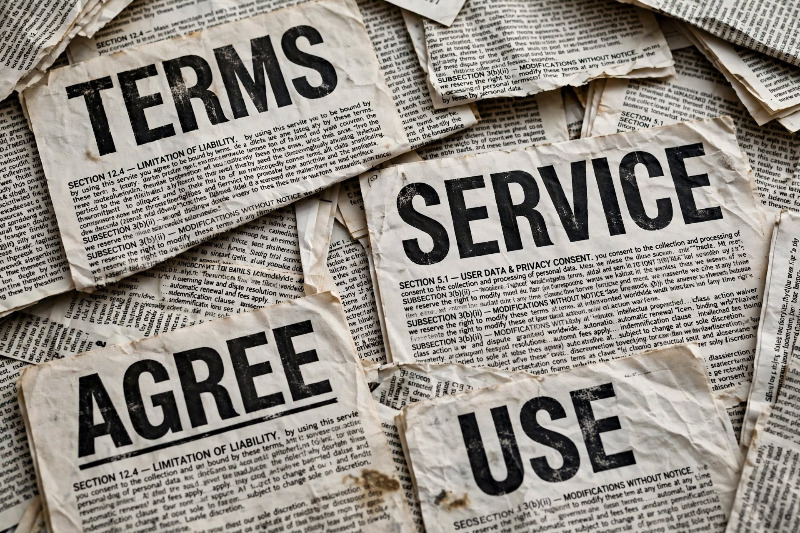
privacy roadPrivacy is a cornerstone of personal freedom, yet its meaning and importance have evolved over centuries.

Aristotle viewed the public sphere, or polis, as the space where true freedom and civic life were possible. For him, public life was about participating in politics and achieving lasting accomplishments, while private life was more concerned with household affairs and personal needs. This distinction meant that privacy was often seen as secondary to public engagement, but it also laid the groundwork for later debates about the value of personal space and autonomy. Even the Romans also drew a line between public and private spheres. Public life was where individuals could gain honor and recognition, while private life was associated with family, home, and personal matters.   Fast-forward a millennium or two, and thinkers like Rousseau saw privacy as a retreat from the pressures of society—a necessary space for self-reflection and authenticity. Hannah Arendt later argued that privacy is essential for forming personal identity and exercising political rights.In 1890 Samuel Warren and Louis Brandeis published in the Harvard Law Review an essay on the right to privacy By the early part of the 20th century, courts began interpreting the U.S. Constitution to protect an expansion of privacy to include personal freedom and dignity.

The history of privacy reveals that it has always been closely tied to personal liberty and the boundaries between the individual and society. From ancient debates about public and private life to modern legal protections, the concept of privacy has continually evolved in response to new challenges. Privacy remains a vital issue today, shaping debates about technology, freedom, and the rights of individuals in a rapidly changing world. As concerns escalated, privacy was recognized as a fundamental human right,  and laws and regulations were created to address the concerns caused by the spread of computers and data collection and storage.

Then came Edward Snowden.

The scale and scope of government surveillance was exposed. The global debate about privacy was joined with personal data security.  A full five years after surveillance and data collection concerns were exposed, the European Union’s General Data Protection Regulation claimed to set a new global standard for data protection and user rights.  Even California, with its trove of data-driven companies, took the GDPR seriously and enacted the California Consumer Privacy Act.

locked phone?Personal data has become a valuable commodity in the digital economy. Companies collect, analyze, and sell user information to drive advertising, product development, and business strategies.

This shift has made privacy a key economic issue, as individuals must navigate the trade-offs between convenience and control over their data. 

As surveillance and data collection become more widespread, concerns about personal liberty and autonomy have grown. When every action can be tracked, individuals may feel less free to express themselves or make independent choices. These issues are at the heart of modern privacy debates, reminding us that protecting privacy is essential for maintaining freedom in a digital society. Privacy in the modern era is shaped by rapid technological change, new legal frameworks, and the growing power of data. As personal information becomes more valuable and vulnerable, understanding how privacy has evolved is crucial for protecting autonomy and freedom.

Privacy is not just a right of the past—it’s a challenge for the future. We all must stay vigilant and informed. Freedom depends on it.

See Santa Tonight. See Serendipity35 in 2026

Ken Ronkowitz and Tim Kellers here at Serendipity35 wish you a very happy and healthy holiday season and launch into your next dance around the Sun in 2026!

Speaking of launches, I have often posted on this Christmas Eve on how to track Santa Claus on his annual trip around the Earth delivering Christmas joy and toys. Tracking Santa using NORAD (North American Aerospace Defense Command) is a beloved tradition that is celebrating its 70th anniversary this year.

NORAD uses the "North Warning System" radar and satellites. They specifically look for the infrared signature of Rudolph’s red nose, which gives off a heat signal similar to a missile launch. The tradition began in 1955 when a Sears Roebuck ad accidentally printed the wrong phone number for Santa—it was actually the top-secret hotline for Continental Air Defense Command (now NORAD). The commander on duty, Col. Harry Shoup, decided to play along, and a tradition was born.

There are a number of ways to track Santa's sleigh. The primary hub for tracking is NORADSanta.org.

While you're waiting for Santa to launch, you can play games in the "Arcade," listen to music, and learn about the history of the tracker. 

On Christmas Eve, starting at 2:00 AM MST (4:00 AM EST), the website transforms into a live 3D map showing Santa’s current location, his next stop, and the number of gifts delivered.

On mobile devices, upu can track on the go: download the official "NORAD Tracks Santa" app. It is available for iOS (App Store) and Android (Google Play Store).

You can also ask Alexa ("Alexa, where is Santa?") or use OnStar in your vehicle to get updates.

On Christmas Eve, you can speak to a live volunteer at the NORAD Operations Center at 1-877-HI-NORAD (1-877-446-6723). Live operators are available from 4:00 AM MST on Dec 24 until midnight MST.

This year, there is also a new web-based calling option directly on the website, which is helpful for international families who want to avoid long-distance phone charges.


Can a Font Be 'Woke'?

the font controversyMy posts on the blog are about education and technology and often about where those two topics cross. It is rare for politics to enter these posts, but obviously,y politics plays a role in education and technology.

In this ever-crazier federal administration, we find that the Department of State has recently declared a move away from so-called "woke" fonts.

WTF does this mean? The translation of "woke" in this context is  "accessible." Apparently, Times New Roman is the preferred "unwoke" font. 

The US government has long provided a whole suite of accessibility recommendations for its agencies. These include accessible design and universal design. They're all under Section508.gov. This past summer. The website said, "Accessibility is about more than compliance with standards. It’s about developing solutions to meet the needs of all users, with and without disabilities. Universal design, a concept now widely used in the private sector, provides a path for federal agencies to shift to this broader focus."

In December 2025, U.S. Secretary of State Marco Rubio issued a formal directive to revert the Department’s official font from Calibri back to Times New Roman.

While the "woke" terminology comes largely from media headlines and social commentary describing the move, Rubio's official memo explicitly linked the font change to the administration's broader push to dismantle DEIA (Diversity, Equity, Inclusion, and Accessibility) programs.

In a memo titled "Return to Tradition: Times New Roman 14-Point Font Required for All Department Paper," the Department argued that the previous switch to Calibri was a "wasteful" and "radical" initiative. Rubio stated the change was necessary to "restore decorum and professionalism" to official work products, arguing that Calibri was too "informal" and clashed with official letterheads.

The memo cited statistics showing that the number of accessibility remediation cases remained nearly identical before and after the change. A spokesperson stated the return to a serif font aligns with "President Trump’s One Voice for America’s Foreign Relations directive," emphasizing a unified, traditional image for the U.S. government.

More likely, the reverals has more to do with the fact that the Biden Administration in 2023 made the change because sans-serif fonts (Arial, Helvetica, Calibri et al) are generally easier for people with dyslexia or low vision to read on screens.

The current State Dept. labels the Biden change as a "wasteful DEIA program. Supporters of the reversal argue that government communications should look formal and authoritative, and that the previous administration's focus on "inclusive typography" was performative bureaucracy.

Critics (including disability advocates and typography experts) argue that the move ignores the technical benefits of sans-serif fonts for digital accessibility and that labeling a typeface as "woke" is an unnecessary politicization of basic office tools.

I care far less about what the default font might be, but I do care that in the time of war in the Ukraine, Israel and Gaza battles and other hotspots getting hotter around the globe, mass shootings, ICE raids on imigrants, and the U.S. economy continuing to fall, that the administration has the time and budget to care about fonts and reversing almost everything done by the previous aministration. 


What happens if the Cloud goes Dark?

As organizations increasingly depend on centralized cloud systems for critical operations, understanding their vulnerabilities becomes essential. The risks inherent in relying solely on the cloud --or any fully centralized information system-- define the pit into which none of us want to fall.

Whether the reason the information system fails is a network outage, a provider faiure, or a security breach, relying on a single-entity failure can disrupt operations worldwide.

In 2021, a major AWS outage disrupted services for thousands of businesses worldwide. The incident was triggered by network congestion and cascading failures in a core subsystem, leading to hours of downtime for critical applications. The consequences included lost revenue, customer frustration, and a renewed focus on disaster recovery planning. Organizations realized that even industry-leading providers are not immune to large-scale disruptions.

This event underscored the importance of having backup systems and clear communication strategies in place. Many companies began reassessing their reliance on single-provider solutions after the outage. It also highlighted the interconnectedness of modern digital services.

A single point of failure can ripple across industries and geographies.

The recent failures in the CloudFlare Sytem have demonstrated how the centralization of vital vendor-based systems has created massive service outage vulnerabilities. Understanding the importance of having backup systems and clear communication strategies in place, many companies began reassessing their reliance on single-provider solutions.  Lessons learned from these events have driven investments in redundancy, failover systems, and staff training. While the response to these "events" has become faster and preparations for recovery more robust, the interdependency of having all of the information eggs in one loosely-weaved basket has not. Off-line availability of services has not been addressed.

From Cloud Reliance to Local Control

Enter the MultiVisor... a service designed to run multiple operating systems concurrently, and provide flexibility, security and independence from centralized cloud services. Implementing a MultiVisor places critical services control in a local console and establishes failure resistant and fault tolerant capabilities for any computing environment.

These are the basic highlights:

Switching between different operating systems on the same machine enables seamless testing, development, and compatibility checks.

Running workloads in separate virtual machines isolates them from each other, reducing the risk that a compromise in one environment will affect others.

Consolidating multiple workloads onto a single physical device allows for more efficient use of hardware resources.

Maintaining full operational capability even without internet or cloud access.


Beyond Outages: Distributed Computing in Action with a MultiVisor

Distributed computing is a the heart of modern resilience strategies. Supporting and accessing multiple redundant nodes ensures that fault tolerance is maintained during and across systemic failures. Scaling resources in or out to accommodate realtime changes in information access loads makes distributed computing adaptable to both individual and enterprise users.

With a MultiVisor configuration on their local devices, users can continue working, sharing files, and communicating over the local network. Critical service interruptions from centralized providers do not bring the flow of information services to a sudden halt. When the cloud connection is re-established, data is synchronized, and operations resume normal integration with central systems.

Distributed computing with a MultiVisor can transform disruption into opportunity. Systems will adapt, recover, and thrive.

montageThis article was written inside a MultiVisor environment on a Mac Studio that simultaneously accessed all local data and services from Windows 11, FreeBSD 15, FreeBSD 14. MacOS Tahoe 26.2 and an instance of GS/OS running in an Apple IIGS environment.